
George Lucas’ White House
On Boots Riley, Star Wars, and Preserving Artistic Vision
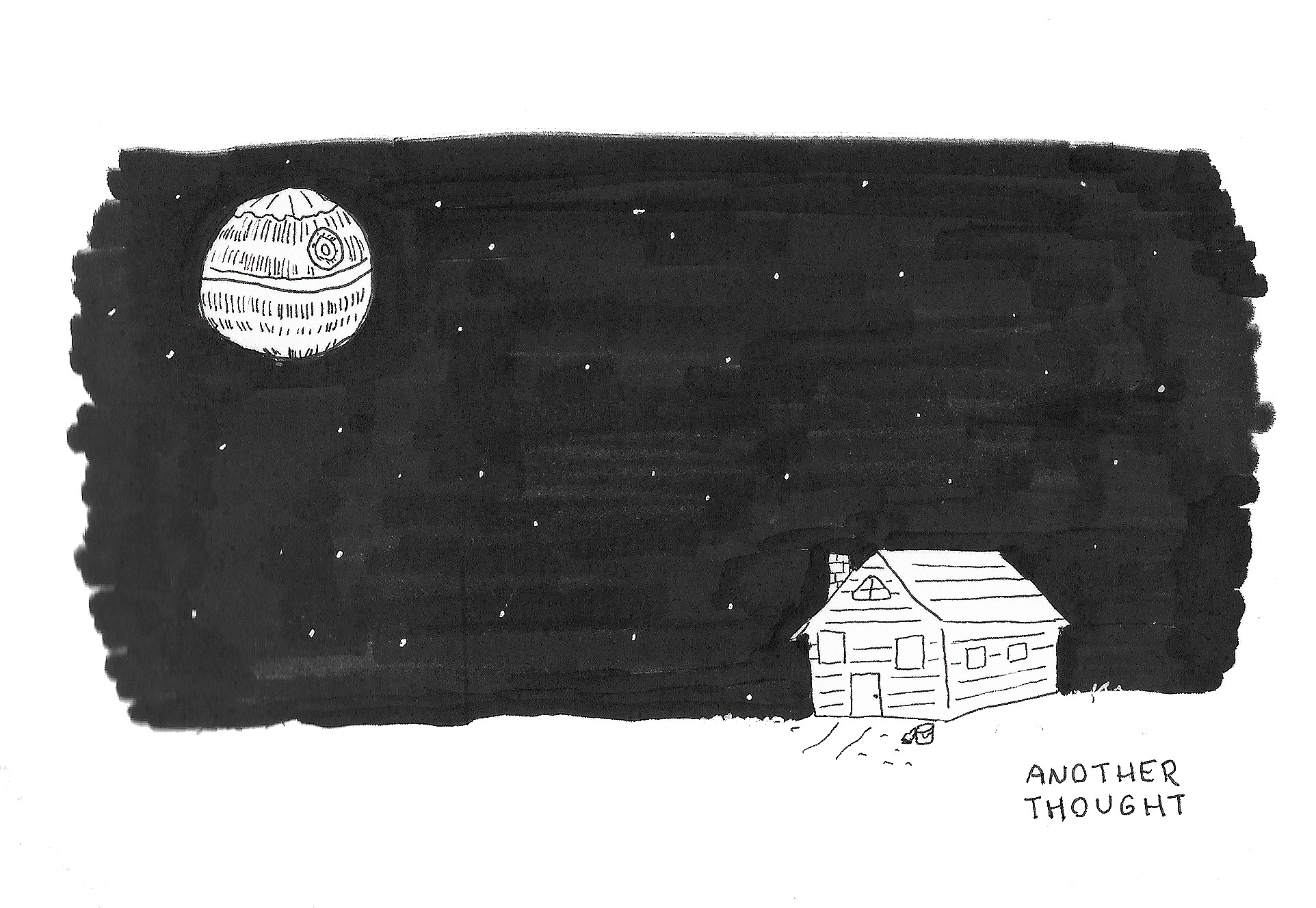
George Lucas caught a lot of flack. Maybe you’re aware.
After creating one of the most renowned and ubiquitous fictional universes of the 20th century, Lucas spent years getting feedback from critics and fans that he was doing a bad job. In 2005, while promoting the last film he’d direct (Star Wars: Revenge of the Sith) on 60 Minutes, Leslie Stahl asks him directly what he thinks of the criticism of his last two films. He chuckles that the critics “never liked any of them.” His words are unfazed but his tone feels bothered. Then he continues:
“The point is, it’s like if you paint your house white and somebody comes over and says, ‘that should be a green house.’
“Well, fine, but I wanted to paint it white and I don’t think there’s anything wrong with white and I don’t think there’s anything wrong with me for painting it white.
“Maybe it should have been a green house, but I wanted it to be a white house.”
The irony in this whole conversation comes at the end when Lucas firmly denounces the idea of an Episode VII being made by himself or anyone else. He insists it will never happen.
Well.
I recently caught The Mandalorian & Grogu, the big screen tie-in to the streaming show The Mandalorian. It’s the first Star Wars movie in seven years from Disney, following the critically maligned Star Wars: Episode IX – The Rise of Skywalker. It was fine. Some fun moments and action but ultimately not really much about anything. Lots of things happen, but it all weirdly feels absent of purpose beyond keeping you entertained just enough for two hours. Very serviceable.
It was a weird feeling to walk away feeling so empty from a Star Wars movie. I’ve been elated after watching some and enraged by others (“Somehow Palpatine has returned”). Never just totally ambivalent.
Like many people, I remember watching Star Wars for the first time feeling like a revelation. A total realignment of what I thought movies could do, a whole universe I wanted to know more about. My imagination just going full throttle.
George Lucas amazed me. I wasn’t even sure what a director really did, but I was totally caught up in how he’d created this whole universe. The Jedi philosophies, a huge variety of creatures, spaceships, and a scale that felt massive and unlike anything seen before. All starting in this guy’s head.
Still, this new film kept me thinking about Lucas’ quote about wanting to paint a house white that everyone else says should be green. Who is right in this scenario?
When someone’s artistic vision becomes a part of pop culture, it will inevitably spiral out of the creator’s control. And look, Lucas made $4 billion selling Lucasfilm and the Star Wars rights to Disney. He’ll be okay. Though reports and comments he’s made suggest that he has regrets.
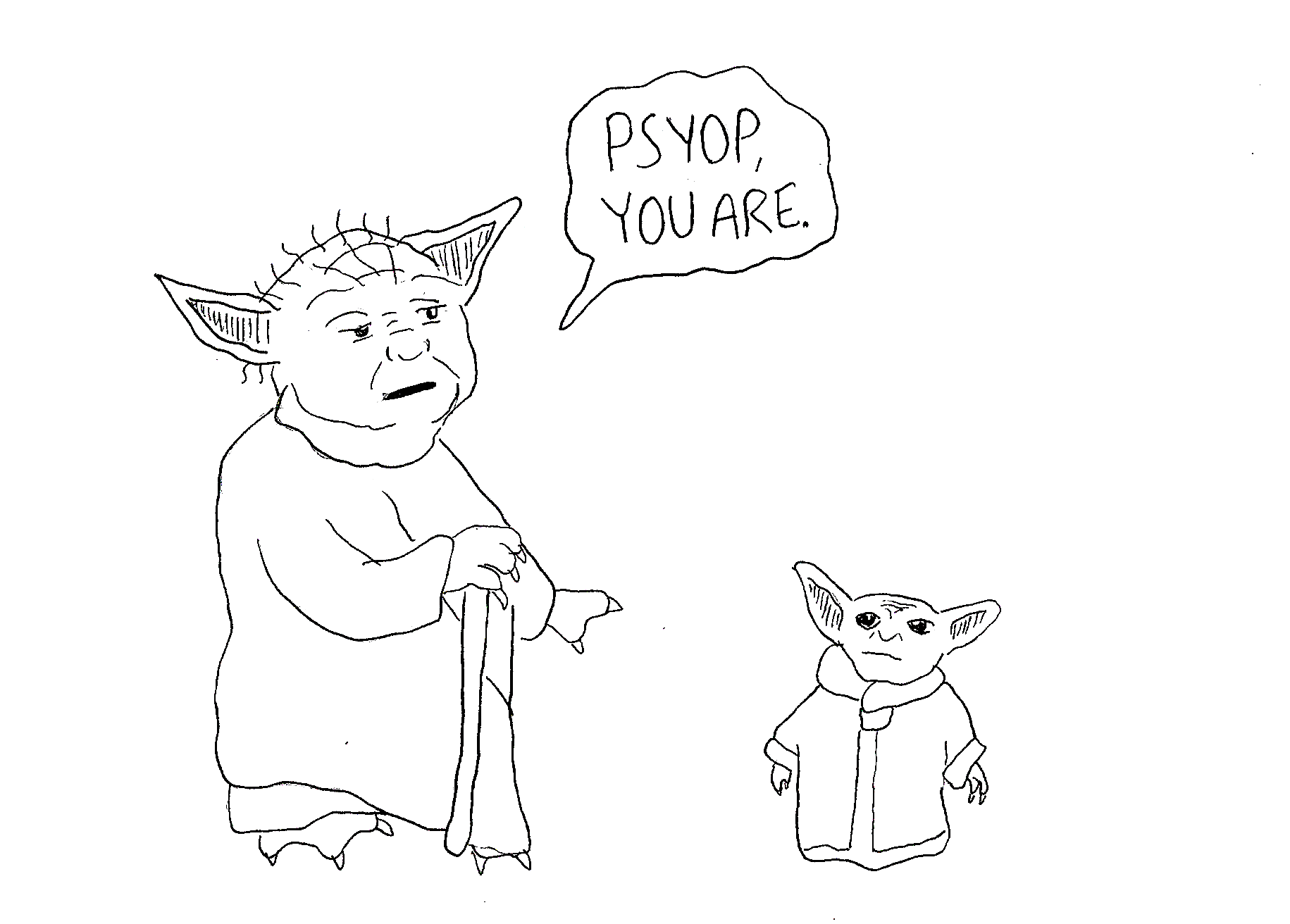
Like many, I was excited for this sale. It meant more Star Wars! We were being told we’d get a new movie every year. There was a chance to improve over the wooden dialogue and CGI overload of the prequel movies that dismayed many fans. And there’s even been some really good moments in this era. But even at its highs, I can’t help but wonder if every move is just betraying the original intent. Lucas may not own Star Wars, but he was Star Wars.
There’s been reported leaks of a treatment Lucas gave Disney for a sequel series. It involves crime syndicates, microscopic Force-beings, and was allegedly an allegory for the Iraq War. Honestly, it sounds very weird, convoluted, and confusing. I would’ve loved to have seen it. It might not have even been good! But it would have been true to the original vision.
And even more importantly, it sounds like these stories would have had a point of view. That’s an underrated aspect of his original films. The first film, A New Hope, took direct reference from the Vietnam War and warned against fascism. As folks have loved to point out on social media lately, George Lucas was mocked for making the central conflict of The Phantom Menace revolve around a trade route blockade. Well… that turned out to be a timely message after all.
Some may argue that Lucas was misguided in his execution and his “best movies” were directed by others. And even A New Hope, which Lucas directed and set off the whole phenomenon, deserves a heap of credit from his ex-wife Marcia Lucas, who edited the film (who sadly just recently passed away).
And yes, those are great credits for collaborations and editing being a key part of the creative process and realizing something to its fullest potential. But at the core of it, there’s still the key ingredient needed: vision.
All these thoughts and feelings came up for me again while watching another movie in theaters recently: Boots Riley’s I Love Boosters.
Riley’s film is about a group of women boosters – people who shoplift designer clothing to resell them for much more affordable prices to their community in Oakland. The film is psychedelic, unhinged, and vibrant. Every scene feels wackier and more visually arresting than the last. It doesn’t hide that it’s a critique on capitalism – that’s the ground floor, it only ups the ante and takes the idea to the extreme the further it goes.
This is definitely one of those movies where you don’t want to describe too much for fear of “giving it away.” And it comes with the “not for everyone” disclaimer. There’s truly surreal sex scenes, actors are playing over the top, the pacing and transitions will make your head spin. I absolutely loved it.
Watching I Love Boosters gave me similar effects as seeing Star Wars for the first time. The sheer overwhelm of trying to take in everything you’re seeing. There’s a whole fleshed-out world here that plays to different rules than our own. Boosters even introduces a piece of sci-fi tech that’s one of the coolest original devices I can recall seeing in a movie in years. Boosters and Star Wars may be thematically different, but they both share a kinship of ambition and relentless pursuit of a vision.
That’s a testament to Boots Riley. Riley’s been testing the limits of what general audiences can take since his days in the rap group The Coup with album titles like Kill My Landlord and Genocide & Juice. He’s always let you know up front where he’s coming from: anti-establishment and unafraid. I Love Boosters even takes its name from a song on the group’s 2006 album Pick a Bigger Weapon.
Riley’s been transmuting this energy into film since his directorial debut Sorry to Bother You in 2018 – yet another holy-shit-I-can’t-even-describe-this-but-you’ve-gotta-see-it movie. And I’d be remiss to not give a quick shout-out to his excellent 2023 series I’m a Virgo. All to say, Riley has made a quick ascent to being one of the most vital and interesting filmmakers working today.
Leaving the theater after watching I Love Boosters, I felt like I needed a moment to even try and understand what I just saw. I’m still thinking about it and eager to see it again. My mind’s been spinning with questions of what certain scenes mean, how certain shots were done, and wondering all of the things I missed when I winced at the cringey moments and cry-laughed at other moments. Bigger than all of this, it’s exciting to go to the movies and feel this way.
And of course Riley’s not the only one holding this mantle. Just a few months ago I was waxing poetic about the brilliance of Nirvanna the Band the Show the Movie for tackling similarly big swings. But the bigger feeling, beyond the state of cinema, was the excitement of seeing an artist execute their vision in the way they wanted it to be done. And maybe there is hope! Just this week The Mandalorian & Grogu was toppled at the box office by a low-budget horror film by a young director. The tides may shift after all.
It’s hard to imagine a studio executive seeing a movie like Boosters and “giving notes.” This might be one of the most anti-establishment films to come out of Hollywood in a while that doesn’t hide beneath vague allegory.
The contrasts between I Love Boosters and The Mandalorian & Grogu are deeply apparent. And, look, I’ll iterate once again that the former isn’t for everyone.
Telling someone who liked The Mandalorian & Grogu that they should instead be watching I Love Boosters would be like telling a die-hard Maroon 5 fan that they really ought to listen to Frank Zappa instead. Not that you can’t love both, but it might be a much harder sell.
Both movies raise big questions for me. What happens when you strip the vision from the visionary? And, inversely, what happens when you let the visionary have their vision?
I think in the last decade in particular, we’ve gotten too comfortable with shoving the vision to the side for “giving people what they want.” To me, this is the logical conclusion to the disease that is calling everything “content.”
Rather than leaving the possibility that a creator’s vision will differ from an audience’s expectations, studios and suits have opted to use “data-informed decision-making” to create “products” that will deliver on “higher customer satisfaction rates” and “ROI.”
This goes well beyond Hollywood and movies. The lesson here is more universal. Placating your vision for the masses in whatever form it might be in – writing, music, all forms of art – has diminishing returns.
Sticking with your vision might blow up in your face, but at least it’s true. I’ve been on both ends of this in my professional career, and I’d always choose the latter. Things often work out best when you can bring in like minds who can help you see your vision through to the fullest, so don’t discount collaboration.
For me, ending up with something stale and soulless would be the bleakest outcome. The world is already loaded up with enough slop and regurgitated ideas meant to satisfy large swaths of people. It may even seem like a safe bet. But even ideas like Star Wars weren’t sure things when they first arrived. Take note of artists like Riley who are following in Lucas’ footsteps to see a vision through.
Slop will devolve back into compost. A real vision will stay true forever.
Want to Support Another Thought? Okay, I’m Down!
I appreciate you reading Another Thought, whether this is your first post or you’re a long-time reader. Another Thought is a labor of love fueled by very long deadline nights, lots of art supplies, and espresso at ungodly hours.
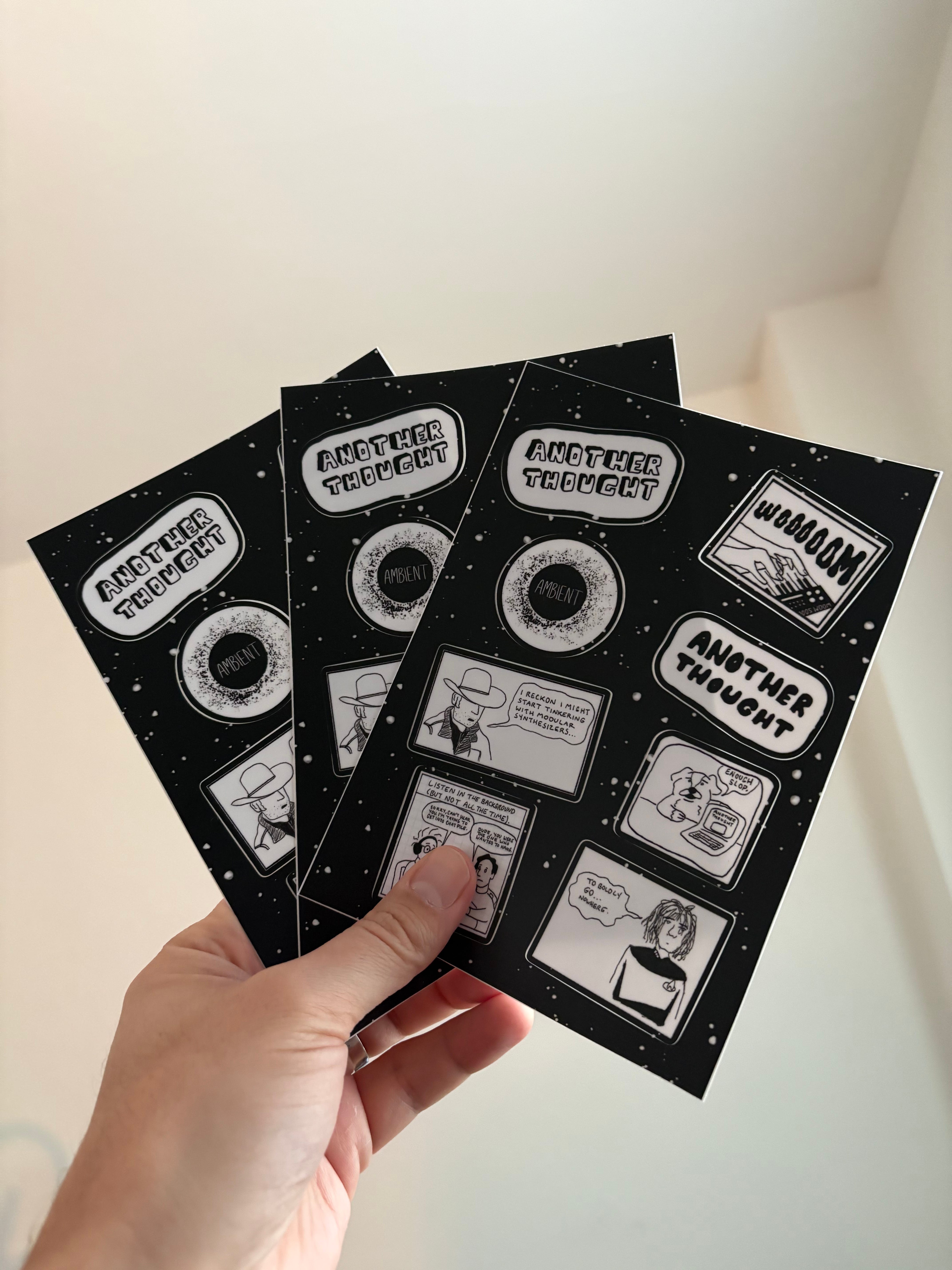
If you want to support the newsletter, please consider becoming a paid subscriber at $5/mo. You’ll get exclusive newsletters, early access to upcoming physical media, and a sheet of stickers featuring drawings from the newsletter and my book mailed to you!
My Book 20th Century Ambient is Out Now!
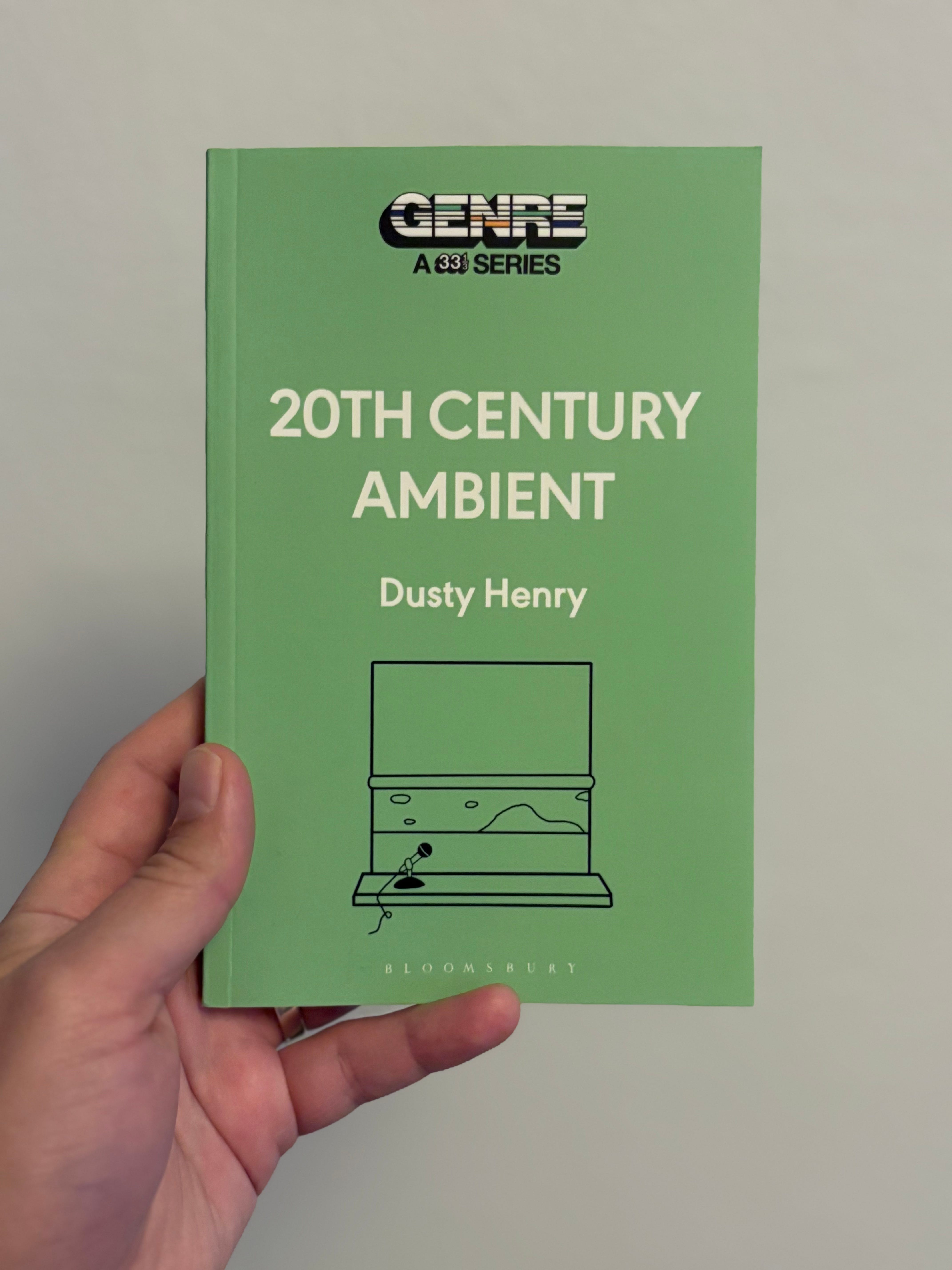
Through text and comics, 20th Century Ambient traces the recent history of ambient music to uncover how the genre has evolved and the role it plays in our daily lives. If you dig the combination of art and essays on Another Thought, I think you’ll love this book.
“Enriched by vivid profiles of the genre’s practitioners and capped by a list of essential tracks, it’s a quirky love letter to an enigmatic sound.” - Publishers Weekly
“Dad! Your book isn’t boring! It has pictures in it! It’s hilarious. Kids can read it too!” - my child
20th Century Ambient is out now from Bloomsbury Books.
Oh yeah, time for another Collection of Comments!
1. This George Lucas quote about the white house is absolutely perfect—and even as a critic, I think this is exactly how every artist should feel about their work.
2. As someone who likes the first Star Wars trilogy but wouldn't necessarily count it among my favorite movies (Back to the Future holds this nostalgia for my childhood imagination), I loved how Lucas made them as an allegory for things that were happening in the real world, only reimagined as a completely new one.
3. Haven't seen I Love Boosters yet but I'm dying to. More on that soon.
4. There is a specific passage from this essay that reminds me of a chilling quote (I'm hoping) only you and I will truly understand: "Giving people what they want instead of what we think they want."
5. A beautiful piece about staying true to your vision no matter the public reception.
Even aside music's reviews, Dusty stays relevant! I will take the opportunity to evoke the opposition between the republic and the empire in Star Wars sequel's movies. This is a substantial point in Star Wars, but it seems that not so much people have reflections on the duality between a republic and an empire. It could make evolving a lot of things in the world.