
Why Write About Music?
A case for continuing forward even in the face of a crumbling industry
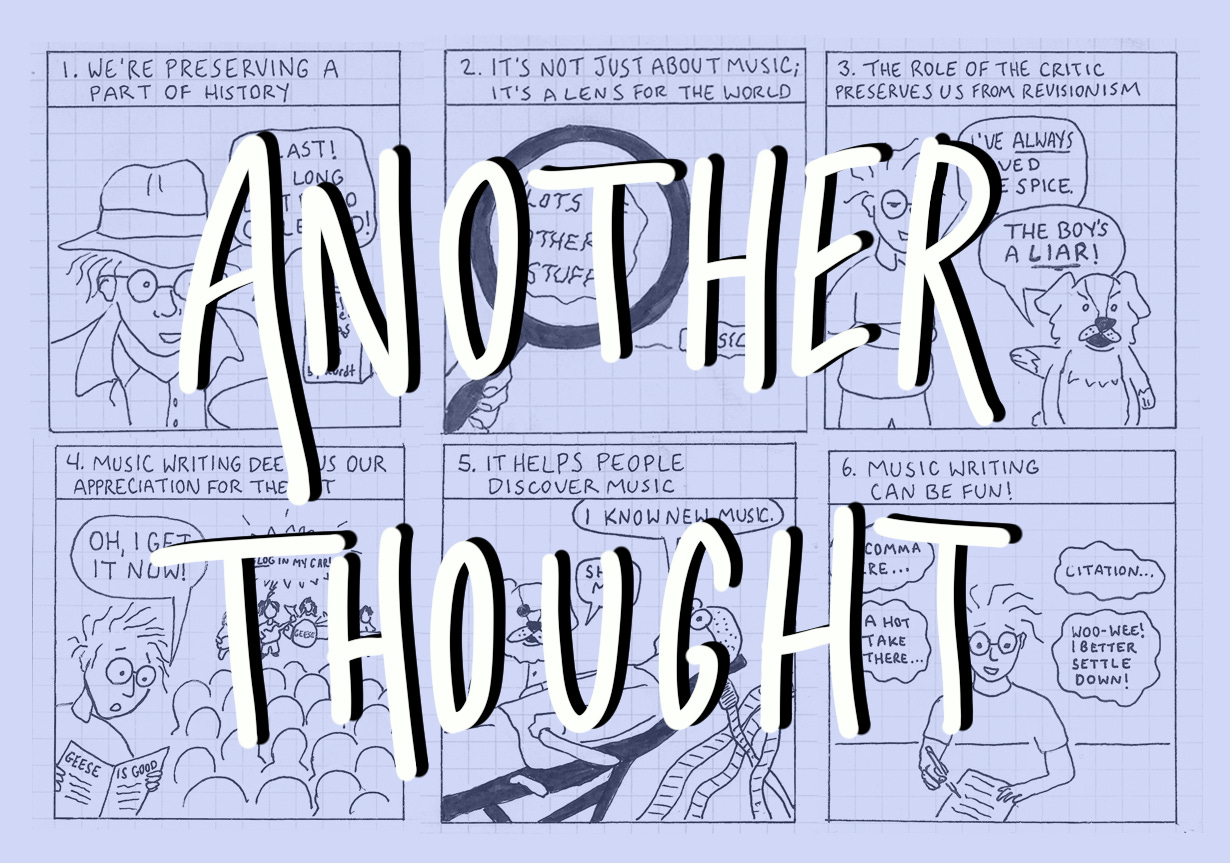
I’m going on multiple decades of people telling me that going into music journalism is a bad idea.
I can’t say that I blame them. Even when I was taking journalism classes in college, our professor constantly warned us that we were entering the field at a historically awful time and should seriously consider whether this was something we really wanted to pursue. The world he knew was vastly different from the one we were about to enter—this was the late 2000s/early 2010s, right as the internet was reshaping media in real time. I actually made my first Twitter account in one of those classes as we tried to imagine where journalism was headed.
As my closest loved ones will tell you, I can be very stubborn. And when I believe in something, you’d be hard-pressed to change my mind. Music journalism—or, more broadly, music writing—is something I don’t think I’ll ever let go of. No matter how the tides keep turning in media, the internet, and culture, I still believe it’s something we need. And that’s not just stubbornness talking.
We’re now at what feels like our umpteenth “future of journalism” crossroads. I came up during one of the biggest shifts—the rise of the internet, which permanently upended print. Since then, I’ve lived through the pivot to video, the push for podcasts, and the endless pressure to make everything shorter to match shrinking attention spans. I’ve learned new skills, adapted where I could, and tried to meet each moment head-on. Now all of that feels filtered through celebrity and nostalgia. We lose groundbreaking series like Louder Than A Riot and gain an endless stream of familiar faces reminiscing about “the good ol’ days.”
We’re seeing layoffs across the industry. Public media funding has been cut, leading to the recent dissolution of the Corporation for Public Broadcasting. Like many others, I’m feeling the effects of this directly. While I’ve been able to maintain my job at KEXP, many of my closest friends and colleagues in our editorial department were not. Programs my team helped build over years are shutting down. Our Saturday morning music magazine show Sound & Vision will air its final episode this Saturday, January 10.
Things have rarely looked bleaker for journalism overall—especially for music journalism, which is often treated as a “nice to have” compared to hard news.
And yet, I feel more motivated than ever.
I’m well aware that there are plenty of more pressing issues happening in our world right now. I’m sure many of my peers in music writing have felt this many times too—“the world is burning and I’m… writing about Diarrhea Planet?” We’re not doctors or lawmakers or electricians or any “essential worker” job that is necessary to keep things going and keep people alive. But that doesn’t mean we lack value or purpose. In fact, I think the role of a music writer has always had much to offer and will continue to be important going forward. Here are a few reasons why.
1. We’re Preserving a Part of History
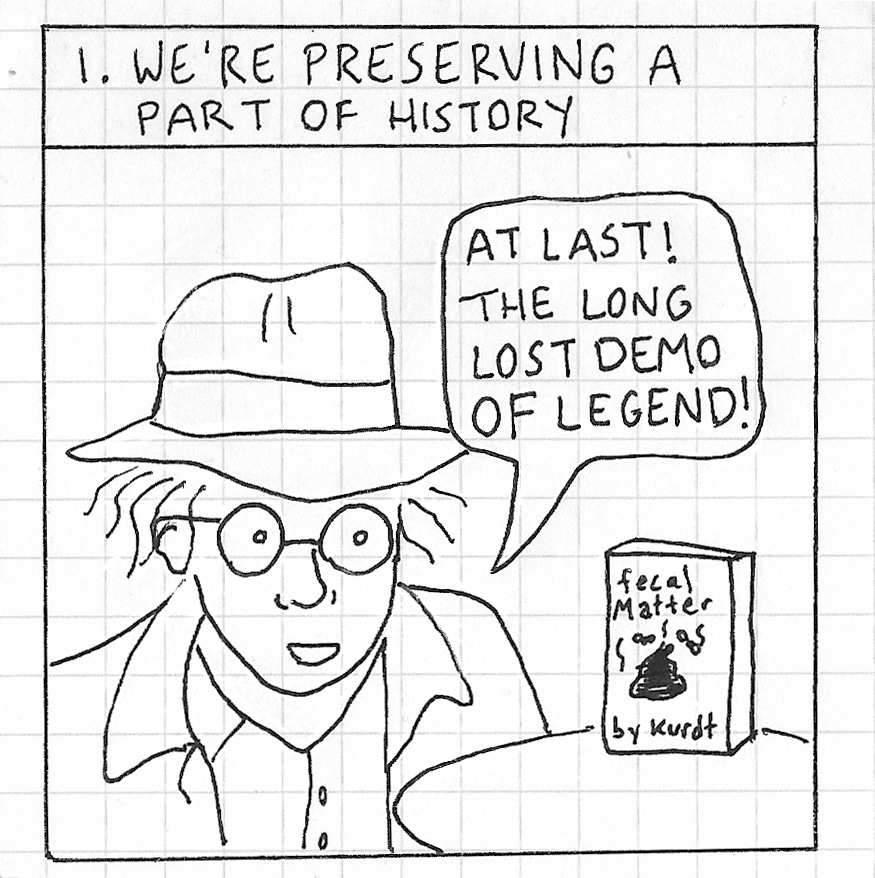
This may sound self-important. But I believe it’s simply a fact. A music writer is a historian. We may never fully see the impact of our work. Maybe some pieces won’t have the impact we think they will. But the existence of this material is key to future understanding of the evolution of arts and culture.
In the past couple of years, I’ve taken on some massive projects that required intense research. Working on my book 20th Century Ambient and podcasts like The Cobain 50 and 50 Years of Hip-Hop, I was constantly sifting through archives—both digitally and physically—through books and liner notes. I’ve spent so much time looking through old articles barely held together through the miracle of the Internet Archive. A reminder that “wow, this information truly could be lost at any moment.”
There are, of course, those juicy morsels of “I can’t believe I didn’t know that” from some interview with Brian Eno in the ’70s. But there are also small but important details that seem obvious yet risk being misunderstood, like album release dates. These are not always as clear as you’d think. I can’t tell you the amount of time I spent stressing over whether Music for Airports came out in 1978 or 1979, with conflicting articles saying different things.
It’s a tired but true maxim that “to understand our present, we must understand our past.” We can look at an obvious example like the birth of rock music. Many may still think of Elvis Presley as its inventor, with his title of “King of Rock and Roll.” Yet we know this is not true and whitewashes the true origins, going back to Sister Rosetta Tharpe and Chuck Berry (I highly recommend reading Martin Douglas’ “Who Stole the Soul From Rock ’n Roll?“).
If we don’t have people working to document, challenge, and preserve these stories, we risk losing these histories altogether.
2. It’s Not Just About Music; It’s a Lens for the World
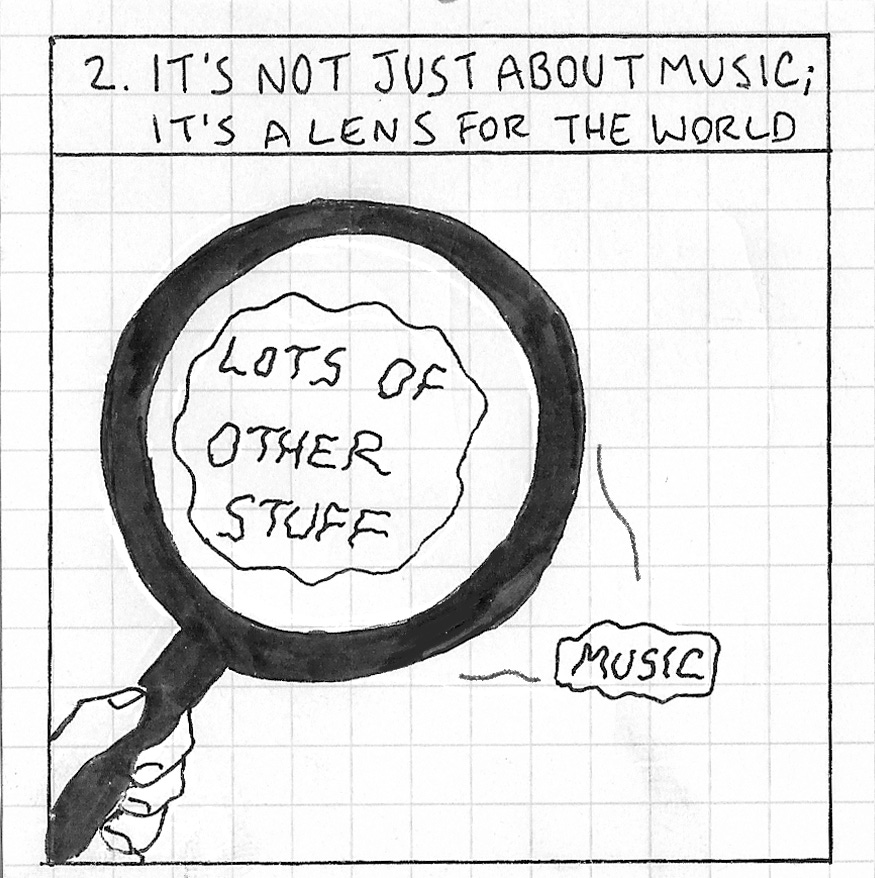
Music does not exist in a bubble. It reflects the culture and current events surrounding it. Not every record is going to be a direct response to its era—like Public Enemy’s It Takes a Nation of Millions to Hold Us Back or Bob Dylan’s The Times They Are A-Changin’, which feel fairly obvious in their relevance. But the stories of how music is made and where it goes give us deep insight into who we are and where we’re from.
I was amazed working on a story about Sister Nancy a couple of years ago, digging into her Jamaican dancehall classic “Bam Bam.” Learning about Jamaican sound system culture, how her work was recontextualized in hip-hop, and how she was exploited for years out of her royalties. Or talking with Hiro Yamamoto from Soundgarden, one of the group’s founding members alongside Chris Cornell, who spoke about the importance of being in a band with two Asian members in a historically white music scene. One of the most moving stories I ever pursued was spending years tracking down opera singer Evelyn Mandac, the first Filipino to sing at the Metropolitan Opera House, and hearing her inspiring story of pursuing her dreams and how Filipino kundiman music informed her vocal performance.
Stories about music are hardly ever just about music. When we look back on world history, the artist’s point of view often gives us a different perspective on the times they came from. These perspectives matter—and that’s before we even get into the cultural impact of the music itself.
3. The Role of the Critic Preserves Us From Revisionism
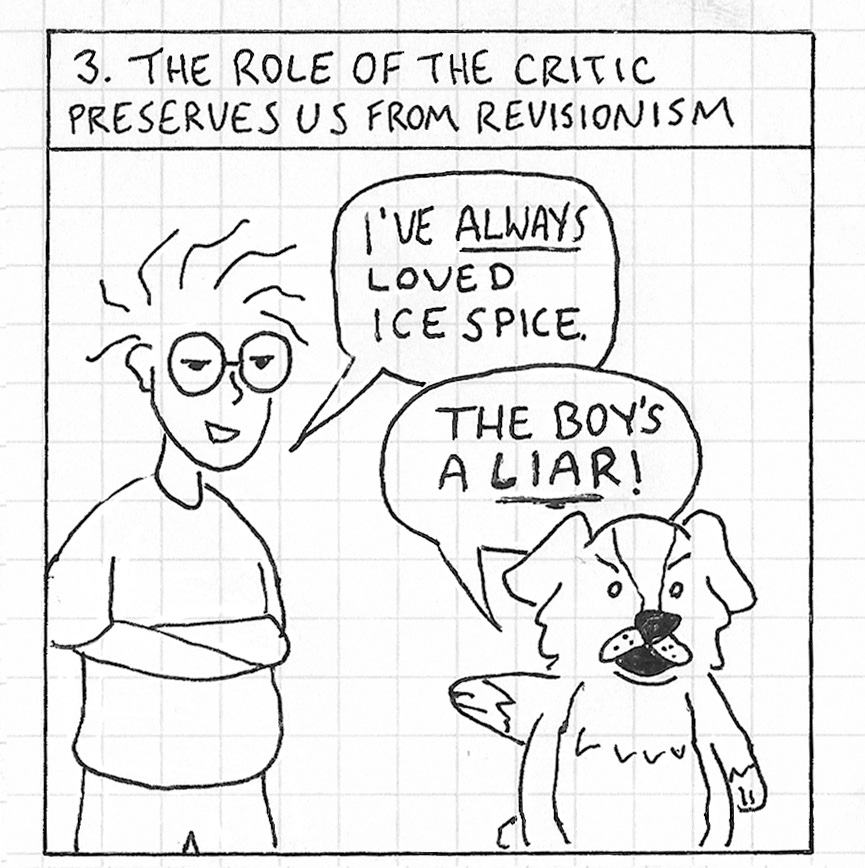
We know all too well how people in power will try to reframe history—or even our present. “History is written by the winners,” they say. But understanding how art is received at the time of its release is just as important as its enduring legacy.
A famous example of this is Led Zeppelin. Today, you hear that name and may think “rock gods, one of the most pivotal artists of the genre.” In John Mendelsohn’s 1969 review of the group’s first album for Rolling Stone, he laments the band’s “willingness to waste their considerable talent on unworthy material.” (In his review of Led Zeppelin II, he opens by saying, “Hey, man, I take it all back!”) The Velvet Underground & Nico was considered a commercial flop when it came out, but has gone on to exert massive influence. As Eno once said, “Everyone who bought one of those 30,000 copies started a band.”
These are more than just interesting factoids. This context matters. Revolutionaries aren’t always seen as such in their time. Understanding reception helps us see how culture shifts and how our own perceptions evolve. What work being created today might become the classics of tomorrow? Or, on the flip side, what blockbusters might feel lackluster down the road? We’ll have to wait and see—but without knowing the starting point, it’s harder to see the end.
4. Music Writing Deepens Our Appreciation for the Art
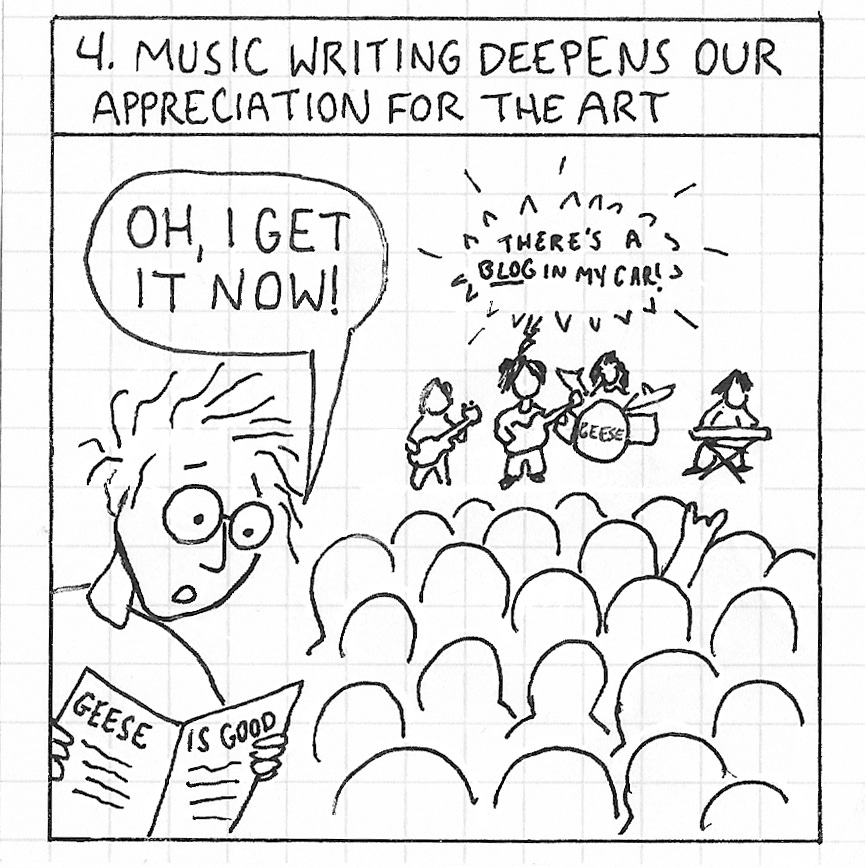
This one feels fairly obvious to me and maybe should be number one on this list. Much of the best music writing helps us better understand the records we love—or even helps us fall in love with a record. (And, as always, the inverse can be true, too.)
I’ve heard people lament that the role of a critic doesn’t make much sense in the streaming era. Why do I need someone to tell me if something is good or not if I can easily hear it for myself and form my own opinion? And that’s true—you absolutely can and should do that. I encourage it! But I don’t think access negates the purpose of music writing.
Music writing isn’t about being a shopping catalog. At its best, it engages with art on a deep level, trying to understand what the artist is attempting to convey. Our own perspectives are limited. Reading about music gives us a chance to see art through another lens. A writer who has spent hours with a record might uncover something you missed on a brief listen. Your perspective still might not change after reading a review or interview—but there’s always the chance that it will, or that it will for someone else.
5. It Helps People Discover Music
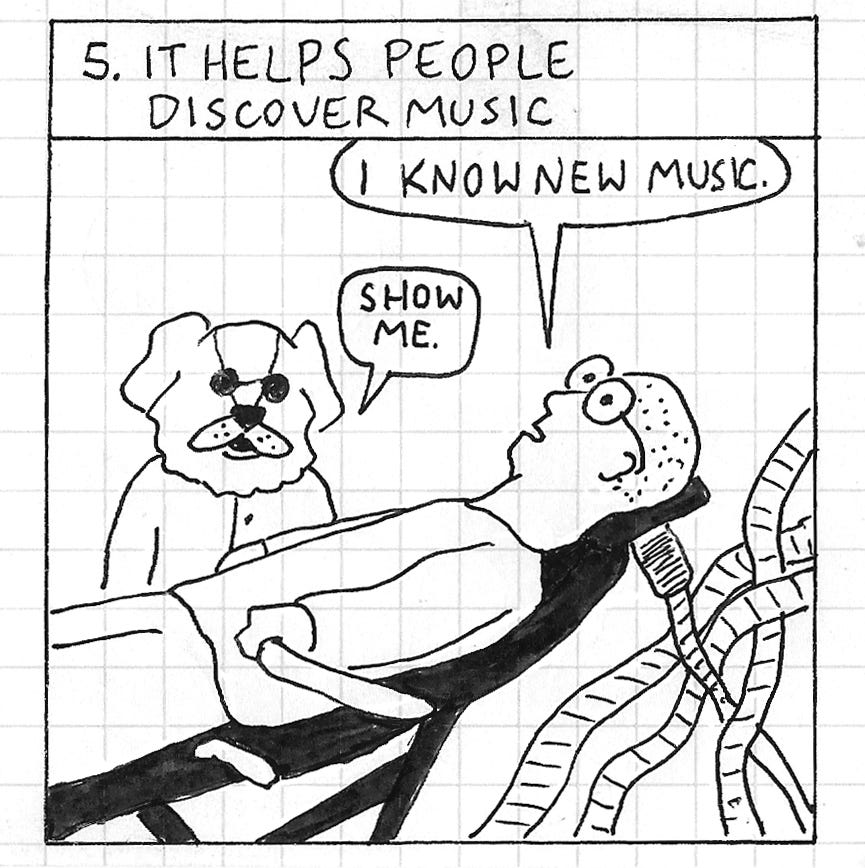
Again, we’re getting into the obvious here, so I’ll keep this one brief. There are plenty of ways to discover music these days. Writing, I believe, is the most engaged way to do so. It’s not just another song on a sprawling playlist or a 15-second clip on an Instagram story. Someone went out of their way to give this album time and space and to convey to others what it’s all about. In rushed times like these, that alone speaks volumes. Many of my favorite albums and artists of all time I wouldn’t have found without coming across a review, interview, or essay.
6. Music Writing Can Be Fun!
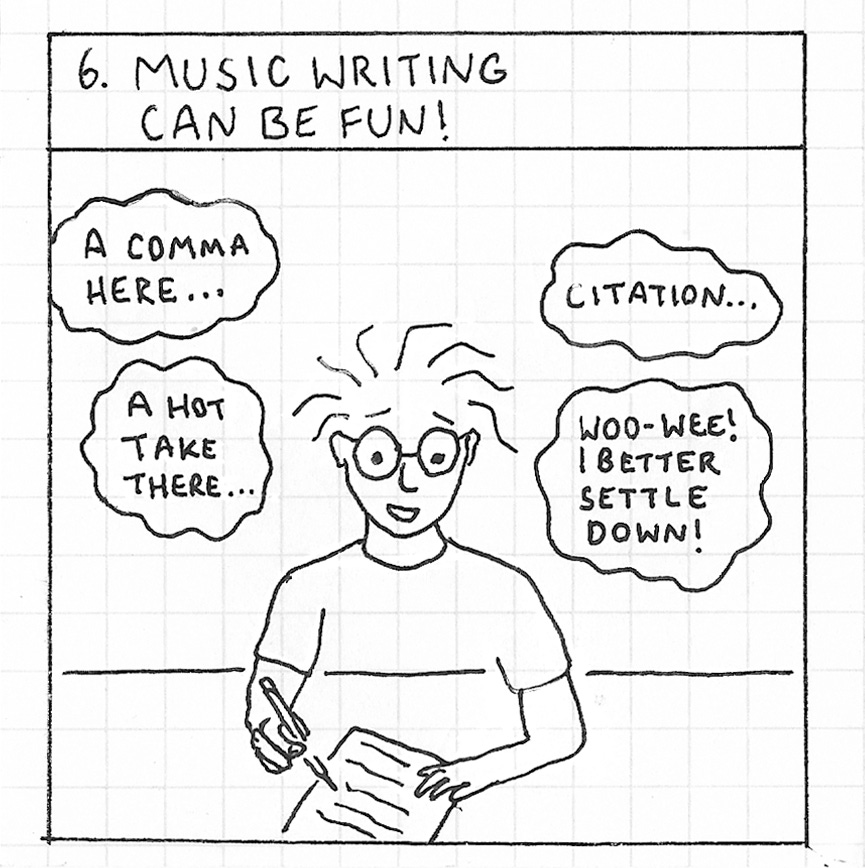
Music evokes all sorts of emotions, but if the primary feeling were “blah,” I don’t think it would resonate the way it has for centuries. Trying to convey the complexity of feelings that come from the musical and lyrical poetry in a song is a unique challenge—but an exciting one.
Also, artists are often very interesting people. To devote your life to a craft like this usually comes with some great stories. I recently finished reading Zachary Petit’s 33⅓ book on Modest Mouse’s The Moon & Antarctica, and it lit a fire under me. Modest Mouse were a band that meant so much to me growing up, but I hadn’t gone back to their work much in recent years. When my friend Martin gave me this book for Christmas, I couldn’t believe what I was reading. Isaac Brock being candid, drunk, and insightful about one of the most excellent and bewildering rock albums of the century so far? Come on. I devoured it.
The experience of writing and researching itself can be thrilling. Music writing has taken me all over the world. I’ve gone to basement venues in Reykjavík, dance clubs in Copenhagen, dark practice rooms of Olympia DIY bands. One time, I interviewed a rapper in the back of a tattoo parlor alongside members of the Black Panther Party. Even quieter moments—having a heart-to-heart with an artist in a café—can be deeply special and revelatory. For all the self-seriousness I’m putting on music writing here, there’s so much joy to be found in it.
7. Writing Is the Foundation, and the Tide Will Shift
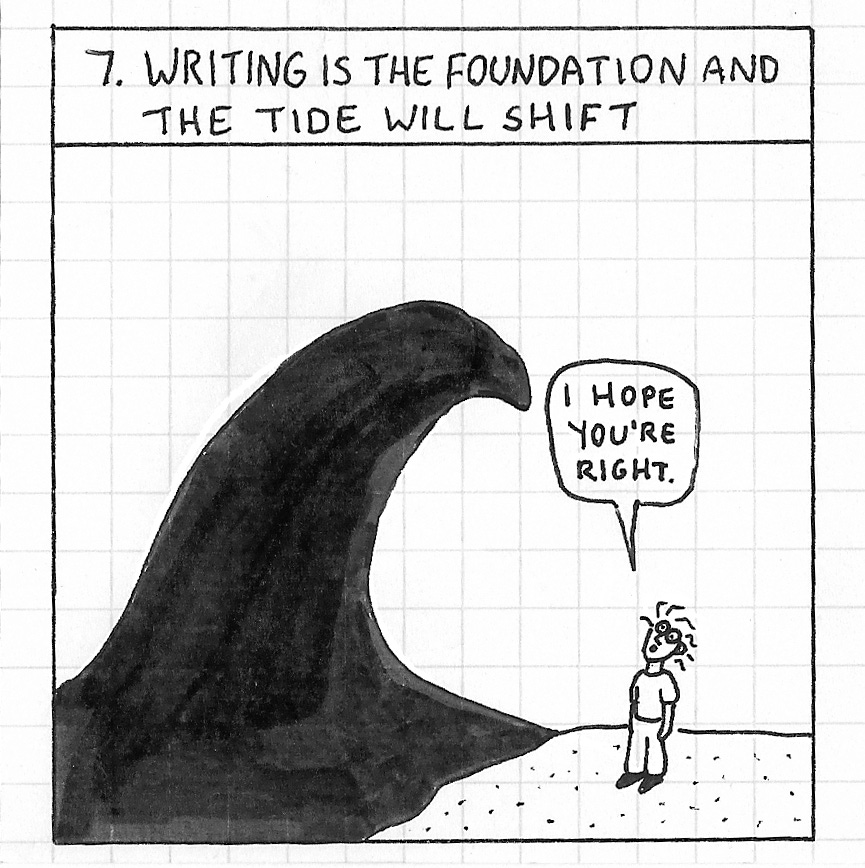
We’re never going to get away from all these “pivots.” Video, podcasts, social media—whatever it might be, there’s always going to be something new to adapt to. My passion for writing is grounded in storytelling, and in recent years I’ve pushed myself to find the best ways to get stories out into the world. I cringe every time I step in front of a camera with my tiny microphone, but I view it less as a concession and more as perseverance.
The best work you’ll see across all these mediums, I truly believe, is steeped in great writing—whether that’s sharp questions from an interviewer, a well-written script, or a caption that gets to the core of a story. A lot of things won’t age well, but work grounded in quality writing will endure.
I also firmly believe the tide will shift. This has been true time and again. We saw it with the 2010s “pivot to video,” when organizations went all-in on the medium only to backtrack when it didn’t pan out. Money chases trends. Writers chase the story.
I know so many people who are tired of the constant stream of “slop.” The slop pile only keeps rising—reboots, celebrities, algorithmically designed “content” meant to satisfy what data says we want. We’re all getting tired of it. There will be a change. We just have to ride the wave while the tide turns back.
8. We Couldn’t Stop If We Tried
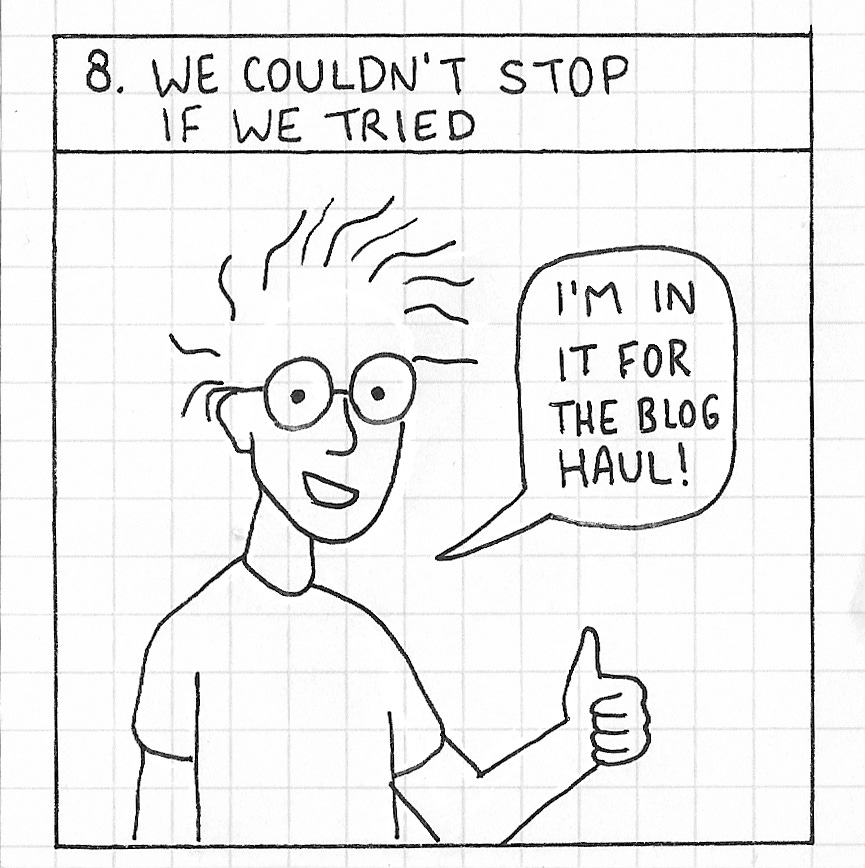
This is a prevailing sentiment among myself and other writer friends. We’d be doing this whether we were making money or not. But, um—please, please—pay us.
Many of us are in this for “the love of the game.” Music moves us so deeply that everything I’ve listed above probably already feels obvious. Writing is a compulsion. My earliest music writing appeared on anime message boards when I was 14 years old. I’m hooked. I hear too much great music and discover too many amazing artists and stories every day to imagine letting this go.
The times are dire, but the work continues. As publications shutter and make cuts, it’s not going to be easy to make a living doing this—if it ever truly was. But I know there are people who crave writing and people who crave reading and listening.
If anything excites and motivates me during these trials, it’s the idea that we writers can pick up our pens and continue on regardless of whose masthead we’re under. If anything, it feels like a moment to cut out the middleman and go straight to the source—whether that’s newsletters like this, social media, making a zine, or a trillion other cool ideas I haven’t even thought of yet.
Embrace the compulsion to write. The stories around music you’ve daydreamed about have value. Preserve the history, expunge your soul, and get it out into the world. The world will change—but writing is forever.
My Book 20th Century Ambient is Out Now!
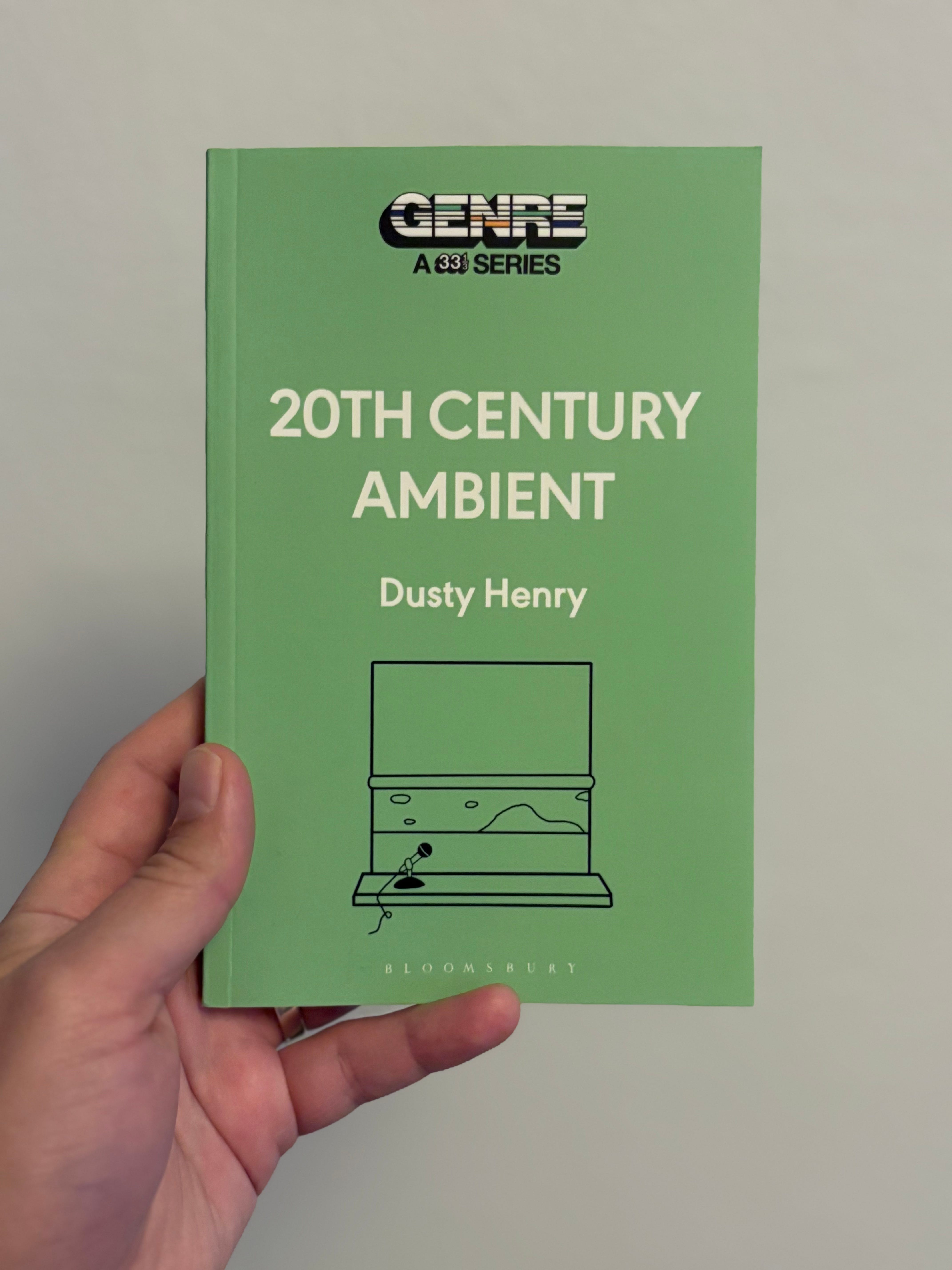
Through text and comics, 20th Century Ambient searches through ambient music’s recent history to unearth how the genre has evolved and the role it plays in our daily lives. If you dig the combination of art and essays on Another Thought, I think you’ll love this book.
“Enriched by vivid profiles of the genre’s practitioners and capped by a list of essential tracks, it’s a quirky love letter to an enigmatic sound.” - Publishers Weekly
“Dad! Your book isn’t boring! It has pictures in it! It’s hilarious. Kids can read it too!” - my child
20th Century Ambient is out now from Bloomsbury Books.
BUY IT HERE: Bloomsbury | Amazon | Bookshop | Barnes & Noble
Support the Newsletter with Another Thought+
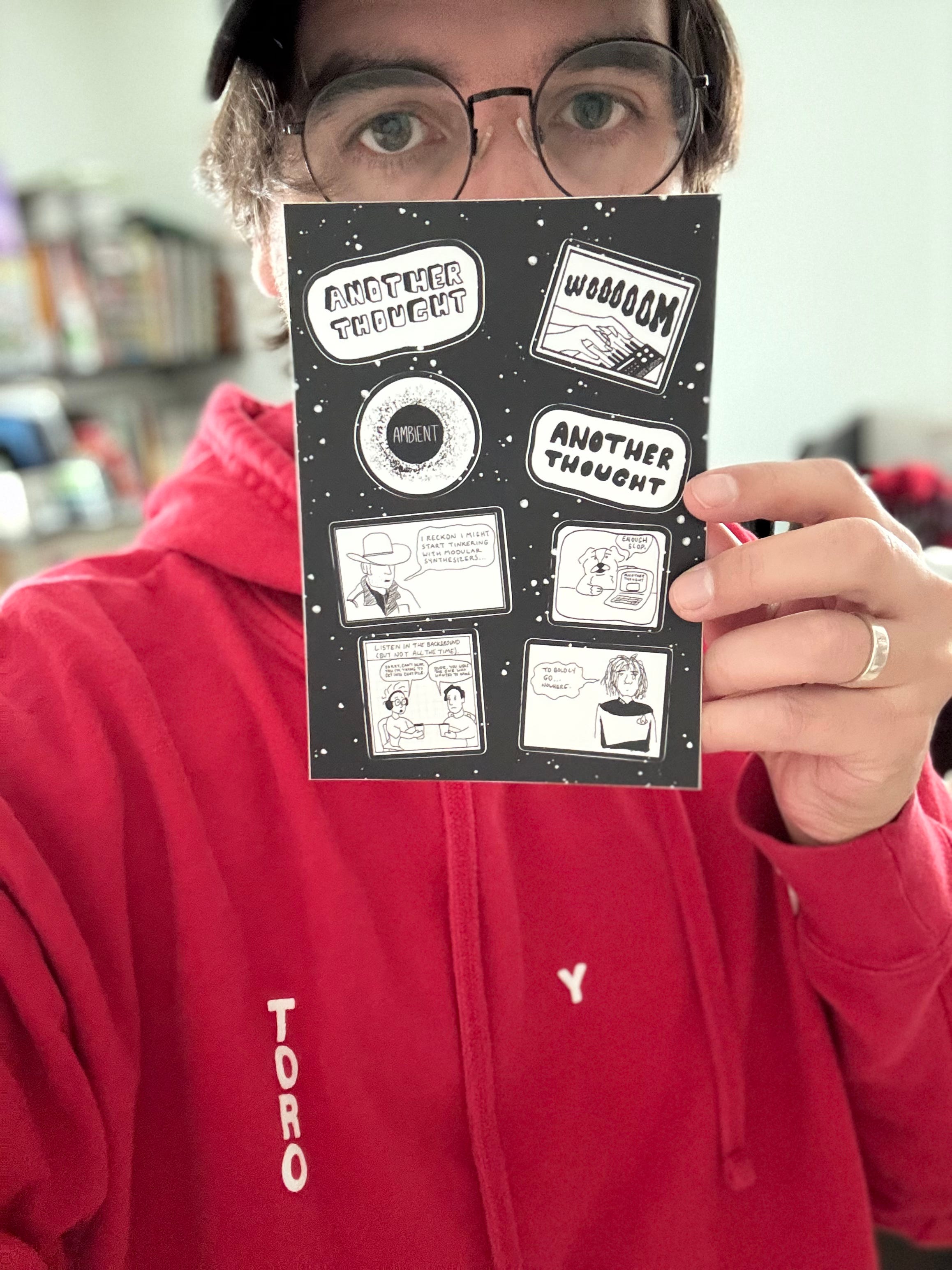
Thank you for reading and supporting Another Thought! Just by reading these posts, you’re already making my day. If you like Another Thought and want to support the work that goes into it, consider a paid subscription. If you’re a big “content-head” like me (love that content), I’m following best practices and calling it Another Thought+.
Here’s what you get for $5/month:
A free sticker sheet when you first sign up (pictured above)
Bonus editions of Another Thought for paid subscribers only in your inbox
Exclusive playlists and mixes
Early access and discounts to upcoming physical zines/comics/prints
The satisfaction of supporting the newsletter and the work that goes into it
And much more!
Well, what are you waiting for? Sign up today!
Thanks for sharing this inspirational summary of why we do what we do. I'm writing about music in the context of dancefloors, and most of what you share still applies to my niche. Thank you!
Nice essay!