
Drawing Your Conclusions: The Case for Art in Your Writing Practice
On Journaling, Drawing, and Getting Out of Your Head
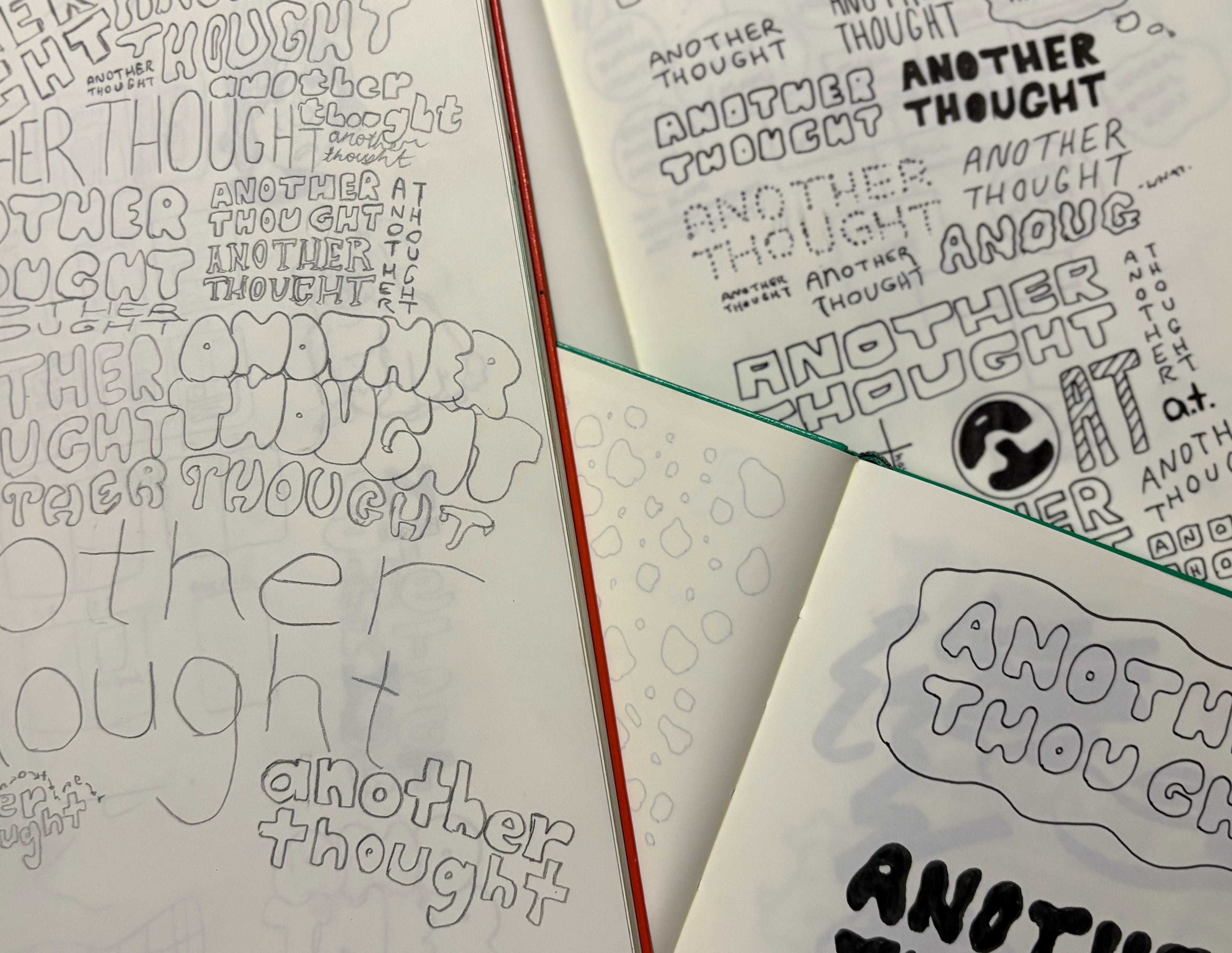
For years, I had mentors, teachers, therapists, and every writing self-help article I could find telling me I needed to start journaling. I understood why. The idea of building a daily writing practice, even just for yourself, could only be a good thing and a great way to process ideas. But knowing and doing are very different.
Every time I tried to pick up the habit, I’d do pretty well at it for a couple of days… then start to fall to every other day, every few days, and then completely forget about it altogether. Sometimes the words would come easy. Other times I’d just be sitting there staring at the blank page, unsure what to write, feeling a strange pressure to deliver—even if I knew no one would read it. I have a drawer full of these aborted journals from decades of attempts. The idea of reading through them feels mortifying.
Most writers I know have a love-hate relationship with the craft. Clearly we love it enough to be doing it, but sometimes the writing process can be demoralizing. Whom among us has not just laid down their head on the keyboard in a moment of frustrated exhaustion? Just me?
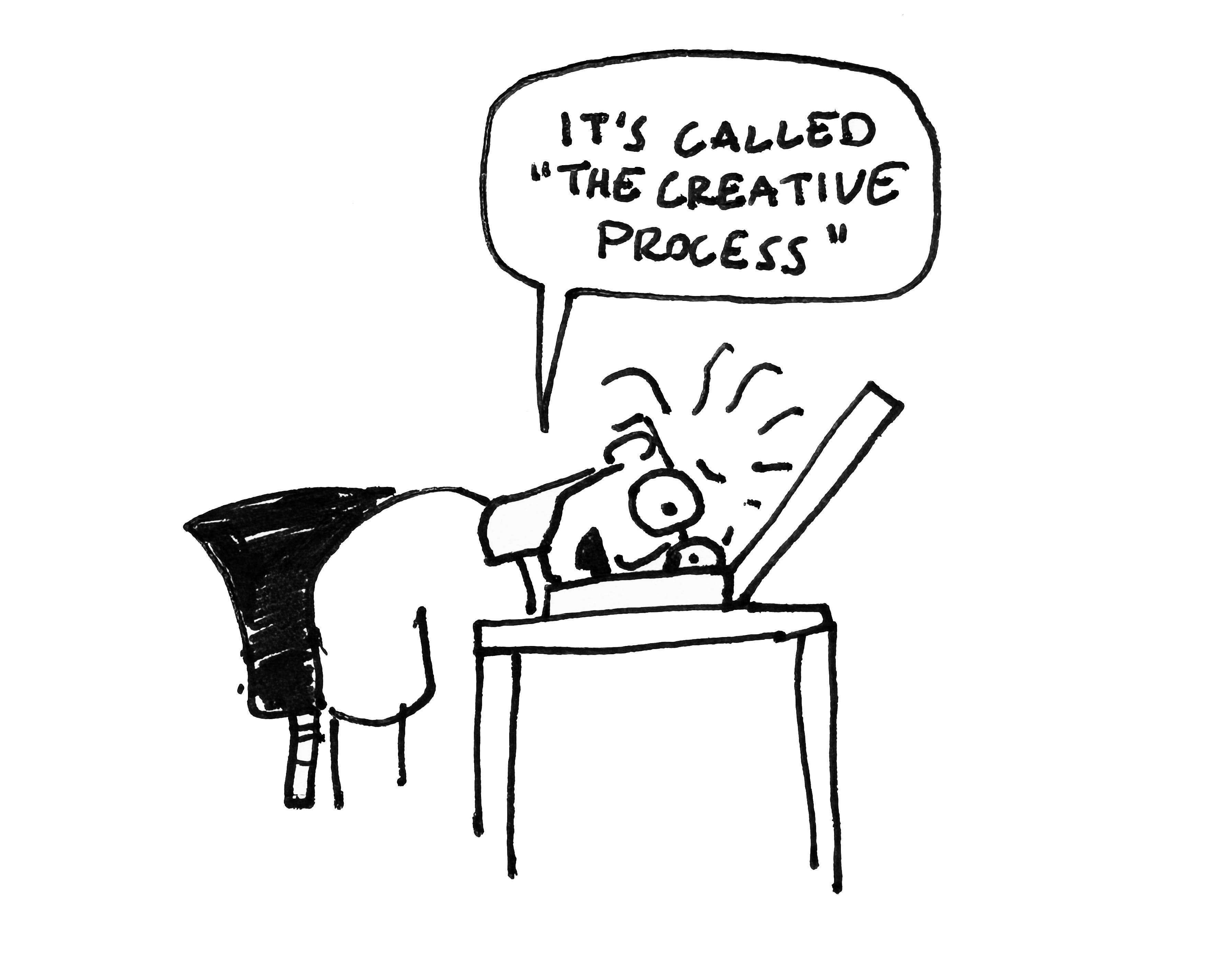
For a long time, when I’d go through these periods where the words would just not come, I felt so demoralized. Like maybe I’d picked the wrong path for myself. This was especially devastating given how I’d built my life, personality, and sense of self all around this idea of being a writer (don’t recommend doing that, by the way). Sometimes words fail you. What do you do then?
As a kid, I didn’t just love to draw—it was a compulsion. Every homework assignment, test, and notebook would have its margins filled with doodles (much to the chagrin of my teachers). One time in junior high, a friend bet me five dollars I couldn’t go a day without doodling. I had to pay up before we even got to lunch. Even as a younger kid, I remember spending hours with a blank sheet of printer paper and just drawing until every inch was filled.
At some point, I convinced myself that I wasn’t good enough to draw. There’s no specific moment or interaction or anything like that I can point to that gave me this impression. But it was a seed of doubt that I let grow. In part, it came from comparison. Seeing other people be so exceptional, then looking at my own crudely done doodles and knowing inherently that they sucked in comparison. And if you suck at something, why would you keep doing it?
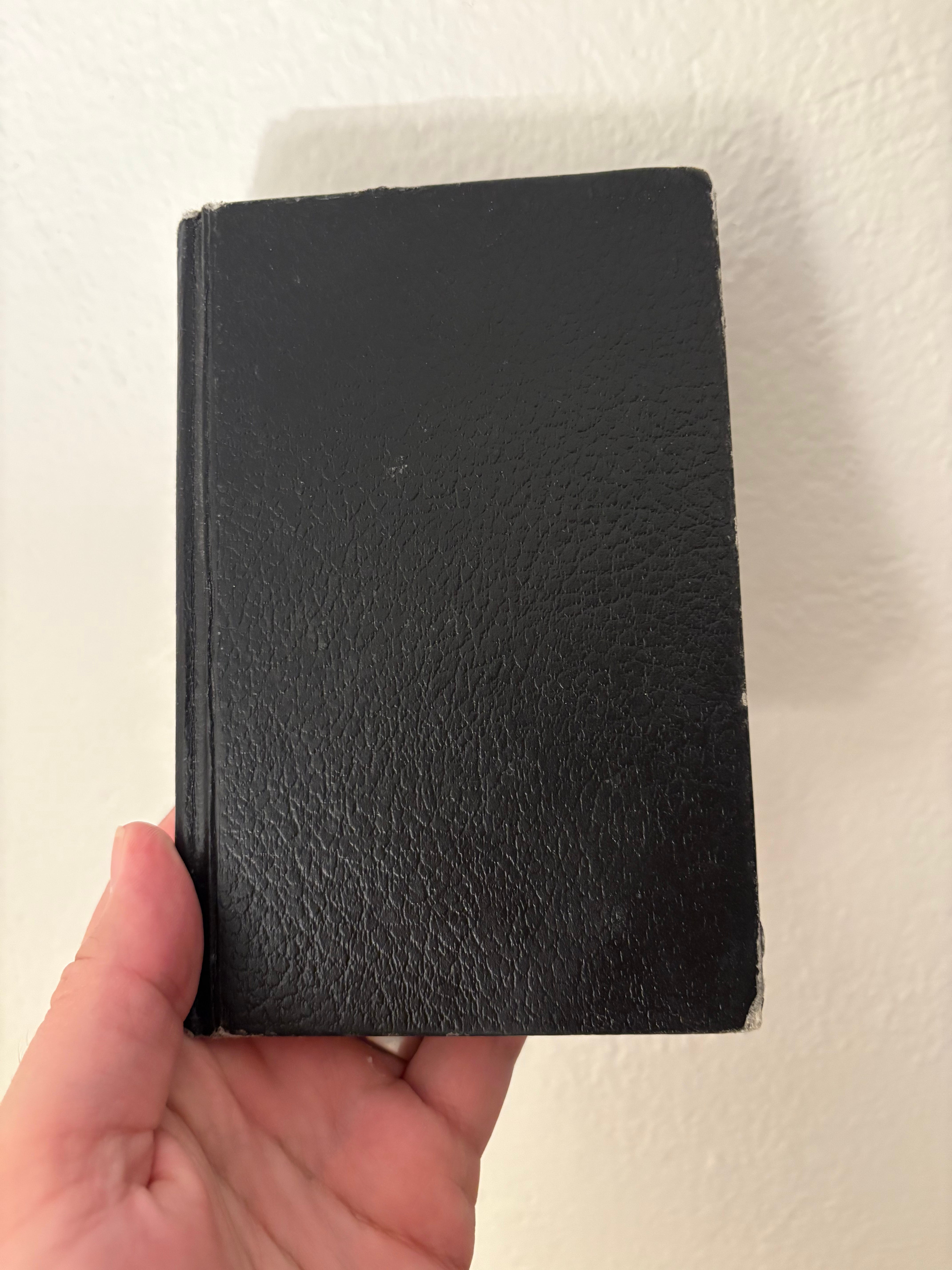
Around 2017, I picked up a small pocket-sized journal and a bag of cheap ballpoint pens. I was “going through something” around that time and looking for any kind of outlet to get me out of my funk. I was tired of trying to process everything in words and dealing with spiraling thoughts. I wanted an escape. So I started carrying this book and pen in my jacket pocket and decided to see what would happen. I didn’t know it then, but this practice would become the backbone of this very newsletter.
I was still in my head about not being “good enough” to draw, but if it was just going to be for my own eyes, then why not? Once I got over that fear and just allowed myself to do it, I was amazed at how quickly ideas began to flow. Pages upon pages of scribbles, ideas, and total nonsense quickly filled the book. Ideas for comics, little ghosts, strange shapes turning into strange-looking people, hastily written notes, and seeds of ideas.
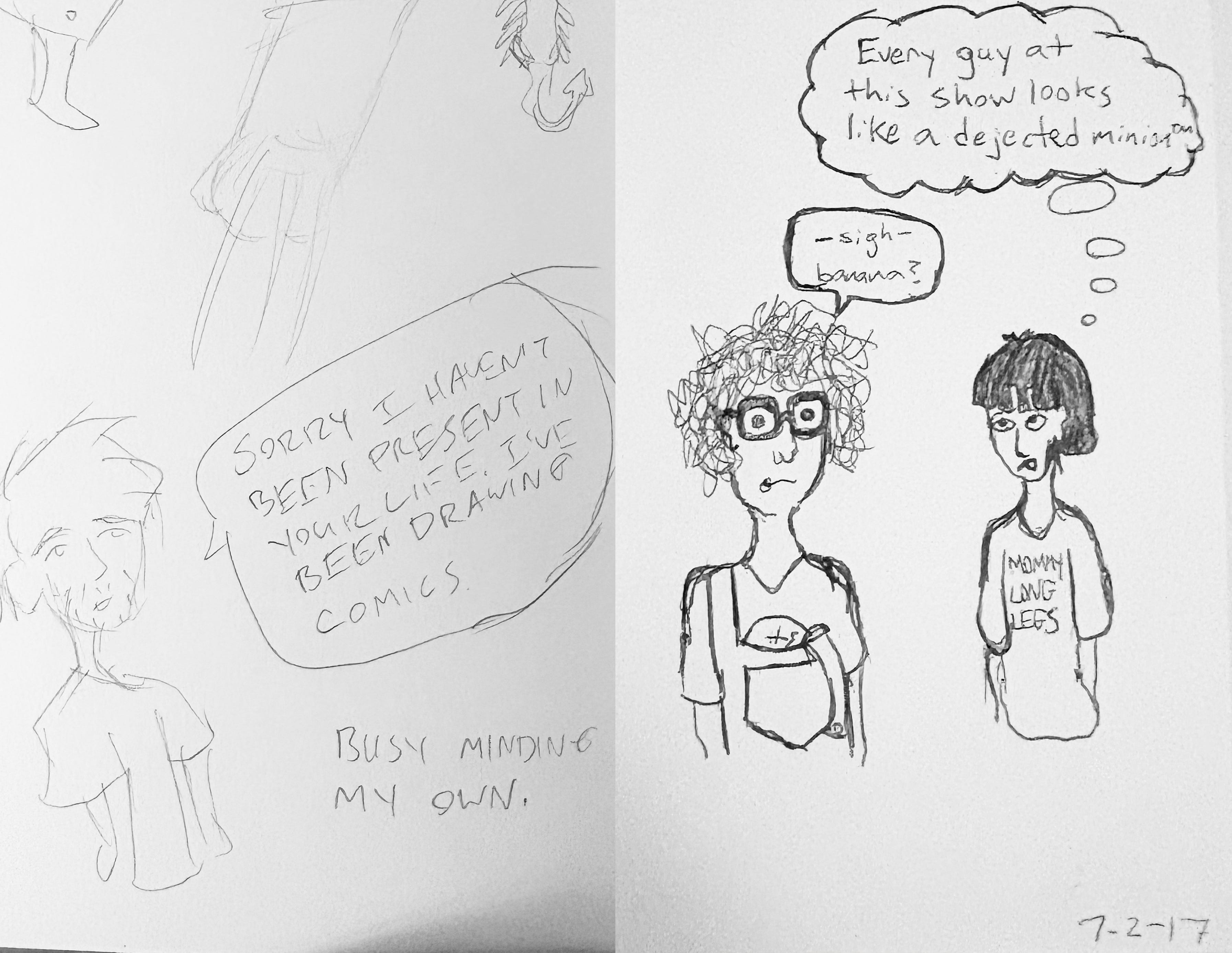
For over a decade, I had denied myself the joy I got from drawing as a kid. I had also been denying myself a key tool for processing ideas and emotions. I kept my notebook close to me, but I hardly showed it to anyone. I was still caught up in the idea that my art was bad, but I loved doing it. I started to build whole comic worlds in my notebook. It wasn’t just the act of drawing anymore; it was a means to let my imagination flow.
I kept this practice up until 2019, when I took a couple of comic book writing classes. That’s when I started to see things differently. Comics weren’t just about being a great technical artist. They were about communicating an idea. I think it must have been in that class where I was recommended Scott McCloud’s book Understanding Comics: The Invisible Art. I picked up a copy from the library and quickly found it life-changing.
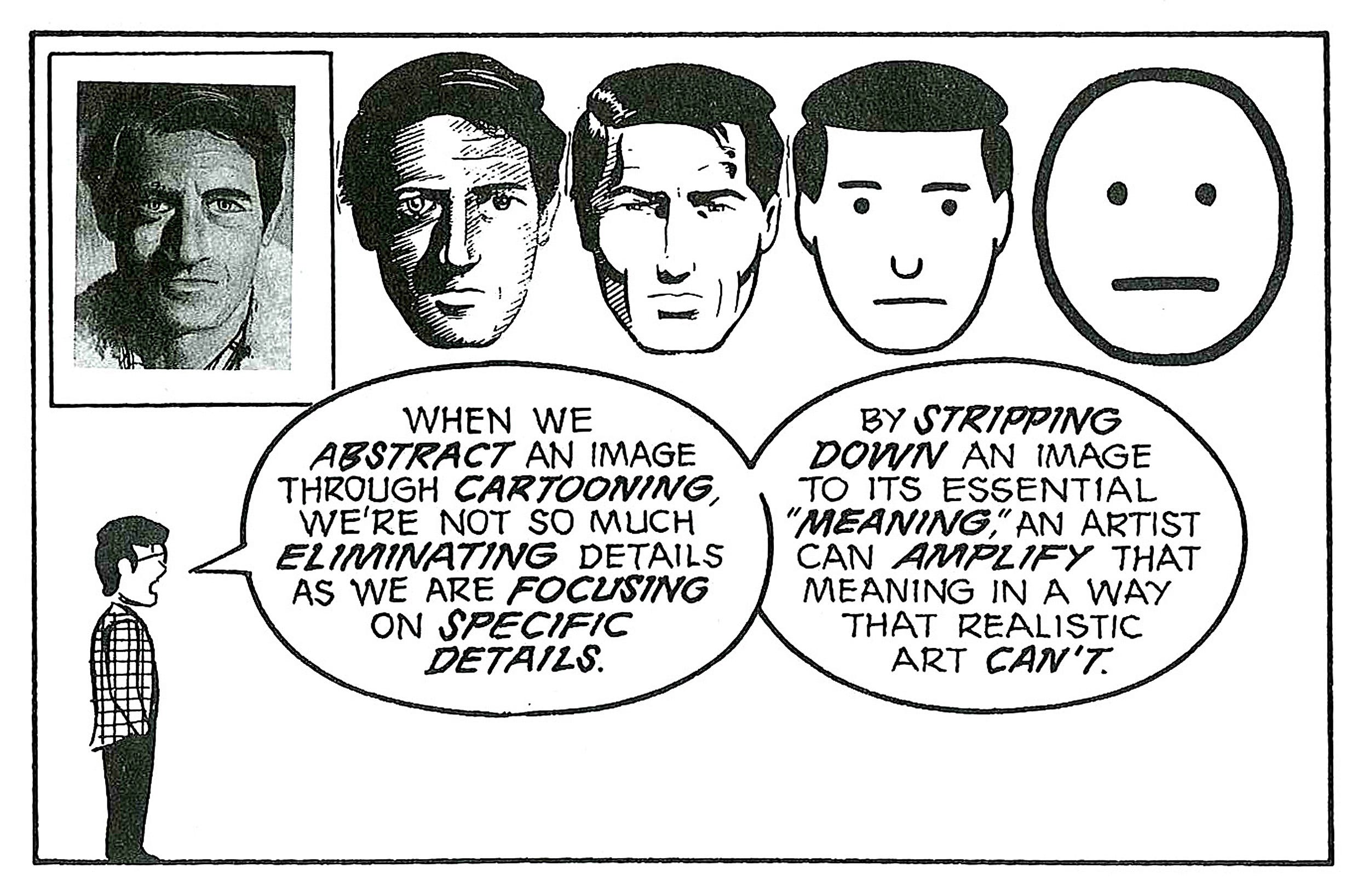
Understanding Comics is a brilliant deep dive into the mechanics of comics, but it’s also much more than that. It’s a manifesto on visual art as a means of communication. He breaks it down as an almost idyllic form of communication, tracing it from cave paintings to Steve Ditko. The way McCloud explains it, it’s not always about the art being technically or even aesthetically exceptional. It’s about how well your art can communicate an idea. It can be drawing with the fine, neat prowess of an artist like Moebius, or it can be as simple as stick figures. In fact, he makes the case that the more “cartoonish” a drawing looks, the more relatable it is for the reader.
This was an awakening for me. The idea that you didn’t have to be a technically proficient artist to make something that resonates with people. Suddenly, drawing went from being unattainable to a new way of getting my thoughts out. The practice only grew more ravenous, more impulsive.
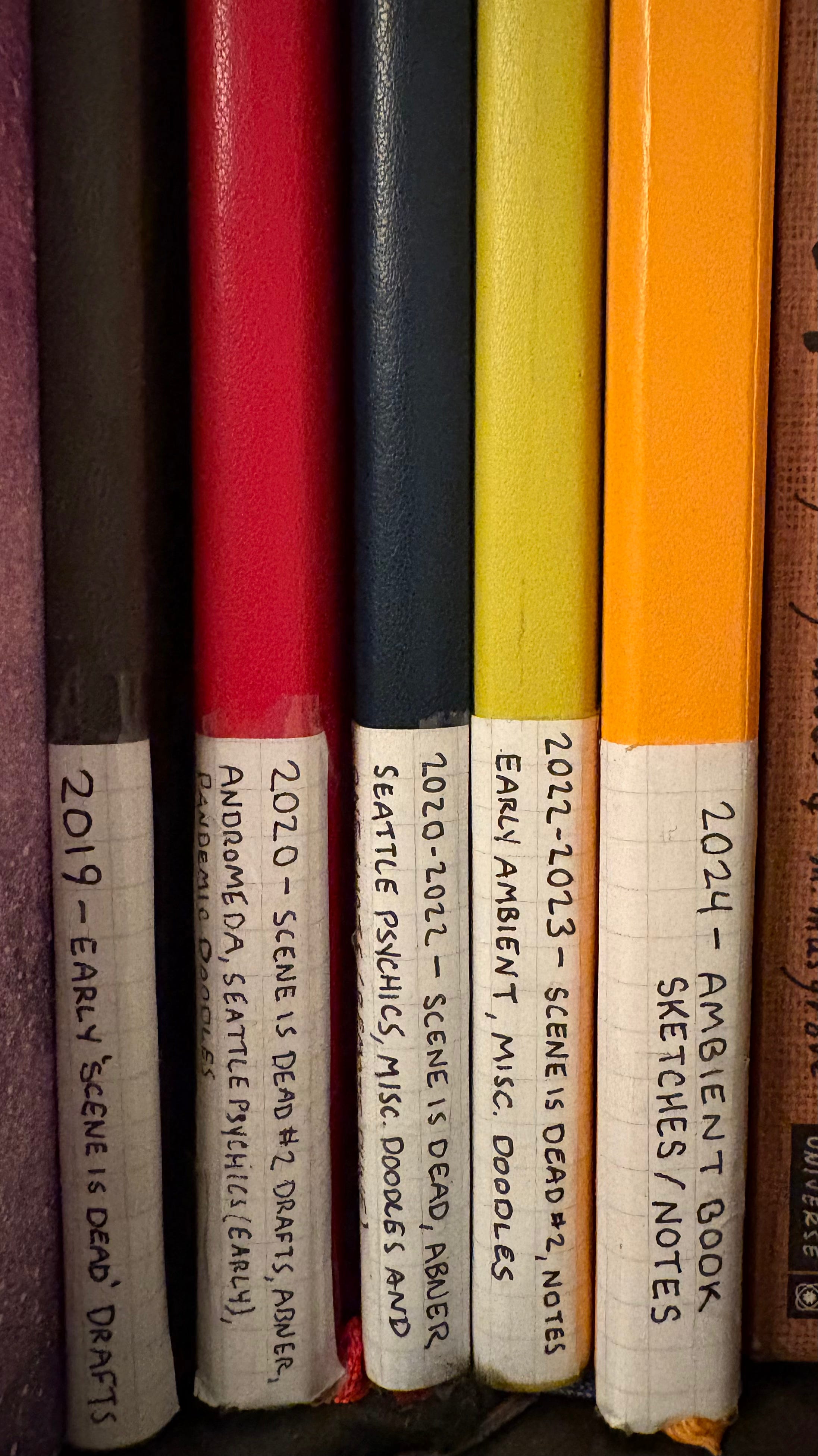
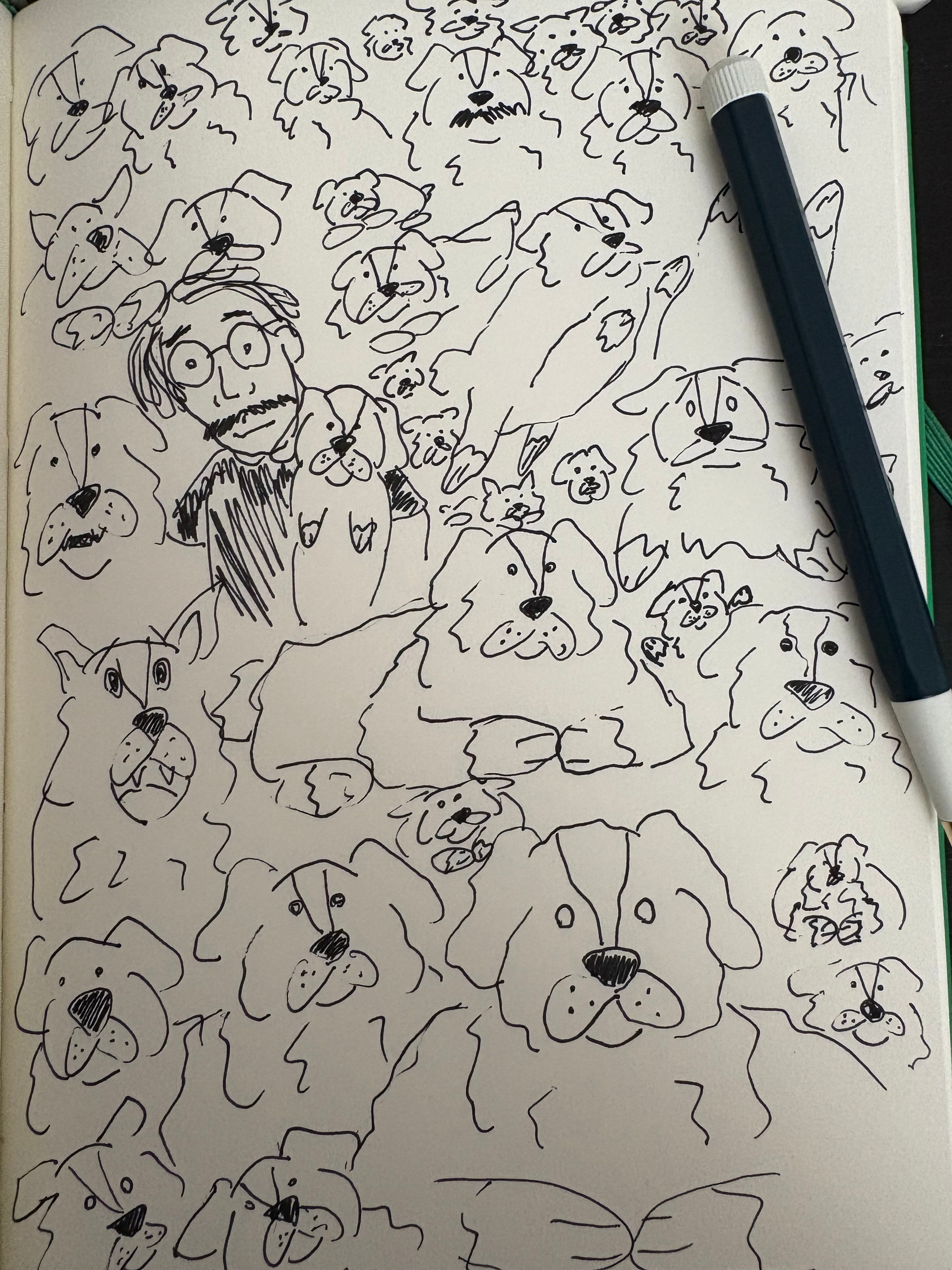
I’ve continued to fill journal after journal and have gotten less precious about it over time. Sometimes I do want to write. So I write. Sometimes I want to draw a comic, so I do that. Sometimes I don’t know what I want to do, so I just scribble or draw blobs or (more often than not) sketch caricatures of my dog just to get something out. Once I stopped looking at the blank page as something prescriptive or something to be lived up to, I was able to get more out of it. And now, having a backlog of journals, I can go back through them all, mine old ideas, and flesh them out.
Opening myself up to drawing again has been a godsend. It’s a huge aspect of Another Thought. It also became a cornerstone of my book 20th Century Ambient. Having the ability to use comics and illustrations in the book helped preserve my sanity while working on it, but it also gave me a new way to approach ideas. If I was stuck on something in the text, I could step back and try it a different way.
Certainly, I don’t want to oversell it. Just because I started drawing more doesn’t mean I’m not still bashing my head over the keyboard from time to time. But allowing myself to draw, to fail, to try something else, loosens up my mind a lot more. Even if I don’t publish a drawing in a piece, sometimes just the act of doing it while working on a draft can get the juices flowing instead of just staring at that stupid, smug blinking cursor. For whatever reason, drawing feels like it circumvents the editor in my head. I’m not getting stuck on certain words and phrases. I’m just trying to get the image out of my head.
Maybe I’m just here trying to convince myself again, but it feels so easy to silo ourselves in boxes. For years, I thought, “This is how a music journalist works,” and I found I was boxing myself in. There are great reasons to stick to certain forms and guidelines with your finished work, depending on what medium you’re working in. But the creative process doesn’t have to be so strict. Plus, there’s something wonderful about the tactile feeling of pen on paper, trying to conjure the image out of your head and onto the page.
If you’ve been like I was in the past and convinced that “you can’t draw” or “it’s not for you,” I challenge you to challenge yourself. It doesn’t have to look pretty. It never even has to leave your journal. It just needs to help you get the idea out. And maybe you’ll find it shows your ideas in new ways you couldn’t even dream of.
Support Another Thought and Get Cool Stuff!
I appreciate you reading Another Thought, whether this is your first post or you’re a long-time reader. Another Thought is a labor of love fueled by very long deadline nights, lots of art supplies, and espresso at ungodly hours.
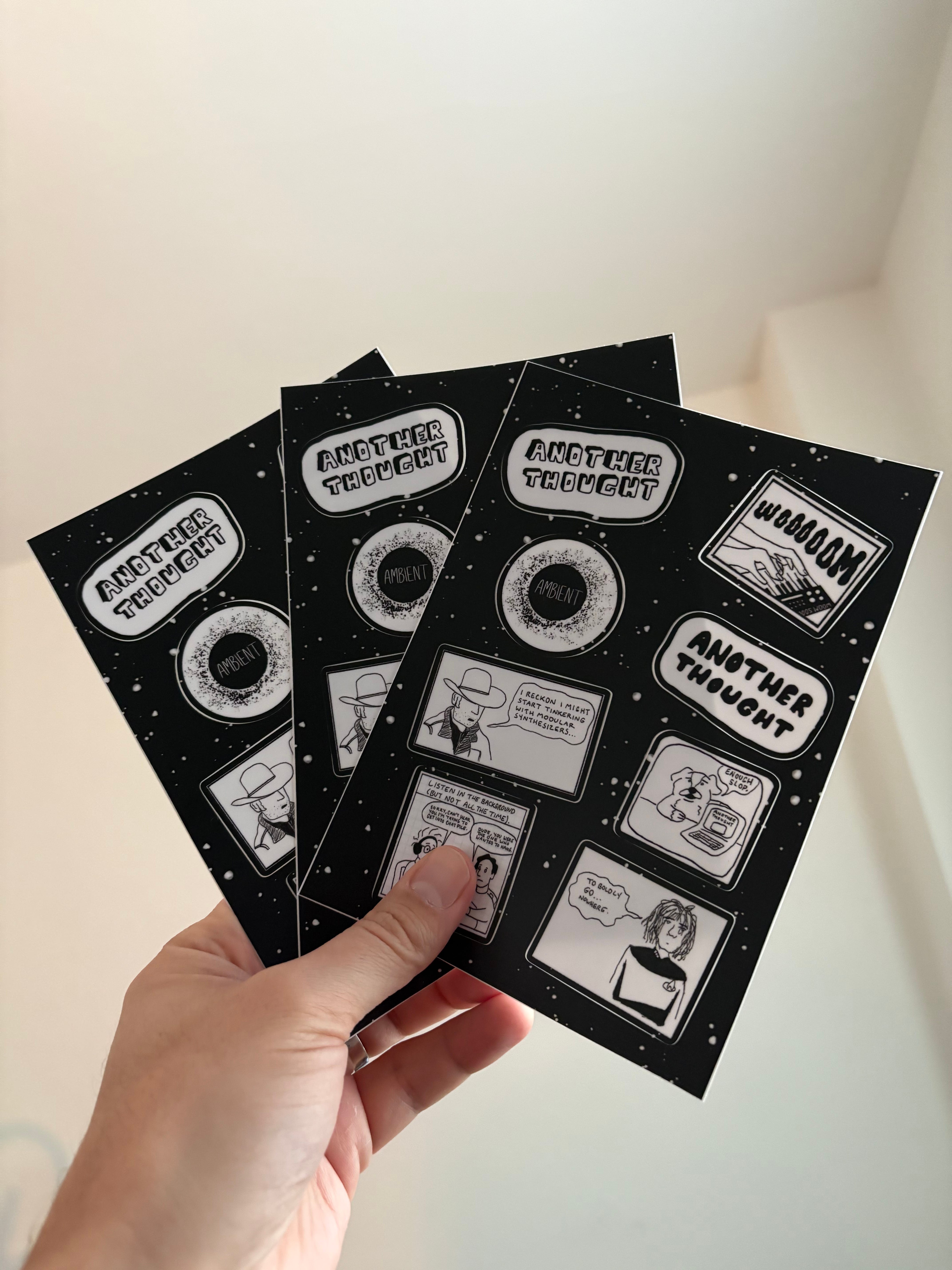
If you want to support the newsletter, please consider becoming a paid subscriber at $5/mo. You’ll get exclusive newsletters, early access to upcoming physical media, and a sheet of stickers featuring drawings from the newsletter and my book mailed to you!
Get my book, 20th Century Ambient!
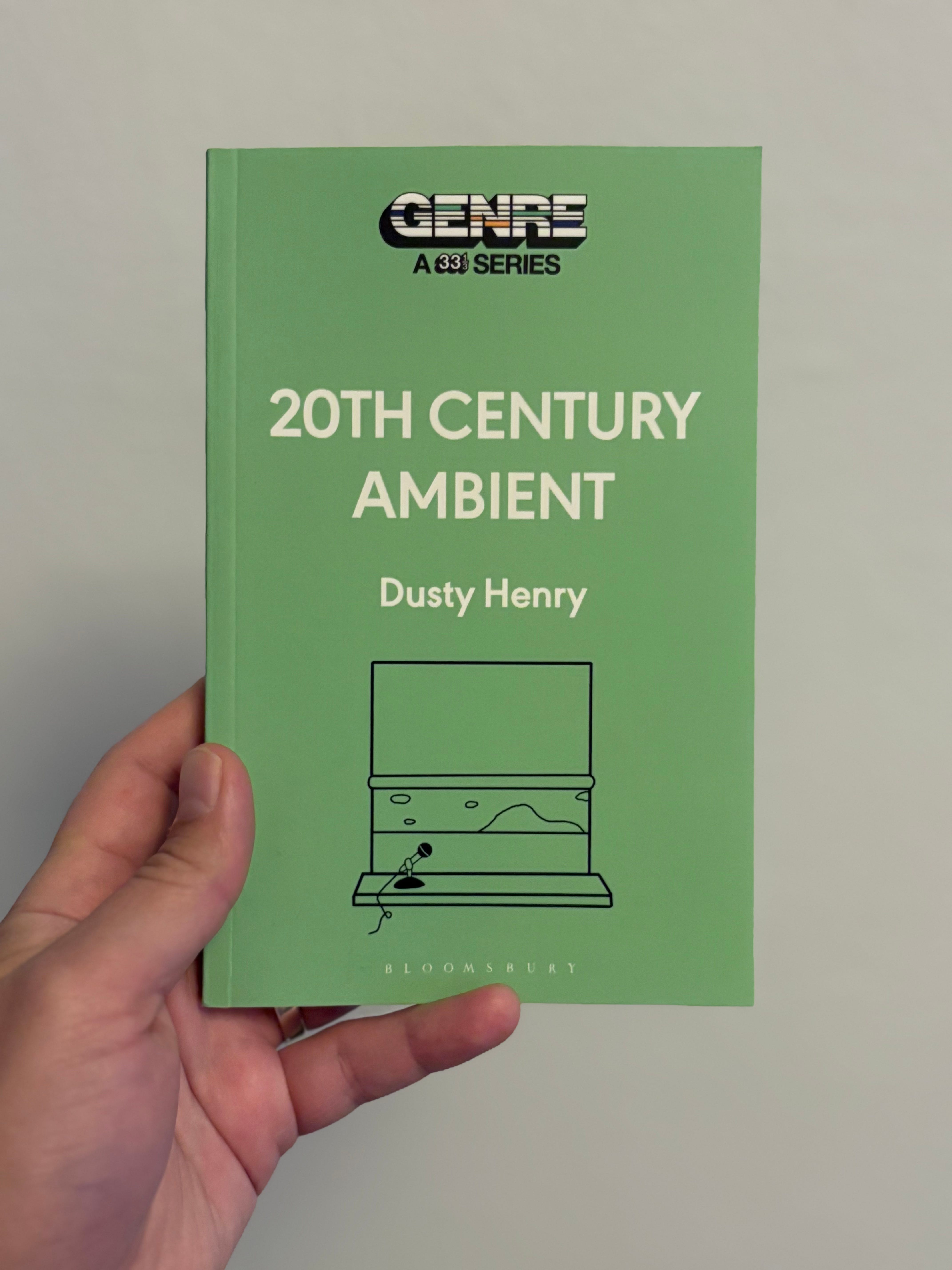
Through text and comics, 20th Century Ambient traces the recent history of ambient music to uncover how the genre has evolved and the role it plays in our daily lives. If you dig the combination of art and essays on Another Thought, I think you’ll love this book.
“Enriched by vivid profiles of the genre’s practitioners and capped by a list of essential tracks, it’s a quirky love letter to an enigmatic sound.” - Publishers Weekly
“Dad! Your book isn’t boring! It has pictures in it! It’s hilarious. Kids can read it too!” - my child
20th Century Ambient is out now from Bloomsbury Books.